Kakobuy Retro Basketball Shoes Court Review
Kakobuy Retro Basketball Shoes Court Review
Kakobuy Retro Basketball Shoes Court Review
Retro basketball shoes often emphasize classic proportions, layered uppers, and striking midsole silhouettes, but the retro look alone doesn't tell you if they're suitable for actual on-court use. This guide focuses on one specific task: helping buyers verify uppers, soles, support, sizing, and cosmetic condition on Kakobuy product pages and QC photos before deciding whether to proceed with a purchase.
This article is for buyers browsing Chinese product listings, preparing to order through an agent platform, or wanting to understand the scope of QC inspections beforehand. It's not a substitute for professional athletic testing, nor can product images alone confirm cushioning performance, durability, or actual feel on foot. 👟
First, Clarify the Wear Tasks These Basketball Shoes Need to Solve
Retro basketball shoes need to meet several basic requirements: the upper must securely wrap the foot, the sole must match the playing surface, the collar and heel must not significantly restrict movement, and the sizing and last must allow reasonable toe room.
Before buying, it's best to define your primary use case:
Mainly for daily walking or casual styling: focus on appearance, sizing, and sole integrity.
Occasional light indoor activity: in addition to appearance, check sole tread, collar fastening, and heel structure.
Planning high-intensity basketball: don't rely solely on product images; also confirm official specs, actual measurements, and suitable playing surfaces.
If the listing lacks sufficient sizing, material, or sole information, you shouldn't turn appearance judgments into performance conclusions. Product images help narrow down candidates, but they can't replace trying on shoes or professional testing. 🔎
Read the Wrap Method from Upper and Collar Structure
When examining the upper, first look at how different materials or panels are joined. Layered uppers often feature overlays, stitching, bonded areas, or decorative structures. These details can help identify visible support zones, but they alone don't prove the upper is sufficiently sturdy.
Key areas to check:
Toe box: observe left-right symmetry and check for obvious collapse, creases, or deformation at the front.
Body: check panel edges, stitching, and seams for neatness, and look for gaps, excess glue, or noticeable misalignment.
Lace area: confirm lace holes, lace stays, and tongue positioning are intact; don't ignore the fastening structure by focusing only on the front.
Collar: check left-right height, padding, and shape consistency to assess possible restriction of movement near the ankle.
Heel: see if the heel stands upright or shows obvious tilt, wrinkles, or inconsistency.
A higher collar doesn't necessarily mean stronger support, and a lower collar isn't automatically unstable. What truly matters is the upper's fastening method, heel shape, lace adjustment range, and how well they match your foot shape.
How Sole Platform and Tread Affect Court Compatibility
Sole inspection should cover three parts: the outsole platform, tread distribution, and sole edges. The outsole profile helps spot visible deformation, the tread shows whether the contact surface is intact, and the edges reveal any lifting, separation, or manufacturing flaws.
Buyers can follow this sequence:
Check if left and right sole profiles are symmetrical.
Examine main contact areas for complete, clear tread with no obvious defects.
Look for gaps or excess glue where sole edges meet the upper.
Note any significant soiling, dents, or shipping-related deformation.
If planning to use them indoors, don't infer grip from tread appearance alone; also check if the listing provides usage guidance.
Different courts, floor cleanliness, and intensity levels all affect real-world performance. Product images at most help buyers spot structural and cosmetic information; they cannot prove traction or wear life on a specific surface. ⚠️
What to Check in Midsole, Heel, and Ankle Support
For the midsole, start with the side profile, thickness changes, and heel height. A thicker midsole doesn't automatically mean softer, and prominent sidewalls don't necessarily equate to better stability. If the listing lacks material descriptions or professional test data, use cautious language like "visible in appearance."
For the heel area, check:
Whether heel heights are consistent left and right.
Whether collar padding is even, without collapse or obvious wrinkles.
Whether the heel base is deformed or the support piece is misaligned.
Whether the seam between upper and midsole is smooth.
For buyers with more ankle movement, collar height, lace fastening, and heel fit matter more than cosmetic details. If the listing doesn't show side, heel, or sole close-ups, list those as items to confirm via QC photos before ordering.
How to Verify Sizing, Last, and Room for Movement
Don't judge sizing by your usual size alone. Different lasts vary in length, width, toe shape, and instep height, so measure your foot length and width first, then compare with the listing's size information.
Before ordering, record:
Bare foot length.
Width at the widest part of the forefoot.
Instep height or whether the upper tends to press on it.
Sock thickness you normally wear.
Whether the main use is daily walking or higher-intensity activity.
If the listing doesn't provide a clear insole length or size chart, don't order based solely on "my usual size." After receiving warehouse QC photos, prioritize checking the shoe box size, inner labels, left-right matching, and dimensions; if the platform offers a measurement service you can request, first understand its scope and conditions.
The toe box needs reasonable room to move, but too much space can cause your foot to slide inside. The final choice should balance foot shape, sock thickness, and use case, not just aim for looser or snugger. 📏
What Product Images Can and Cannot Prove
Product page images are generally suitable for initial screening. They help buyers observe upper panels, colorways, sole shape, collar profile, and details shown, but camera angles, lighting, retouching, and sample condition can all affect judgment.
What can be initially confirmed:
Whether the listing shows the upper, side, heel, and sole.
Whether the structure in images matches the text description.
Whether there are visible decorative elements, stitching, or lace systems.
Whether the listing provides sizing or specifications.
What cannot be confirmed from product images alone:
Actual cushioning and wearing comfort.
Stability during prolonged athletic activity.
Traction on specific surfaces.
True material feel and durability.
Whether every production pair exactly matches the displayed sample.
When buying through Kakobuy, QC service mainly verifies visible information like style, quantity, color, size, and model, and checks for prohibited items. Sealed packaging is typically inspected without opening, checking outer appearance and packaging info. Thus, QC photos are helpful but not lab tests or full performance evaluations.
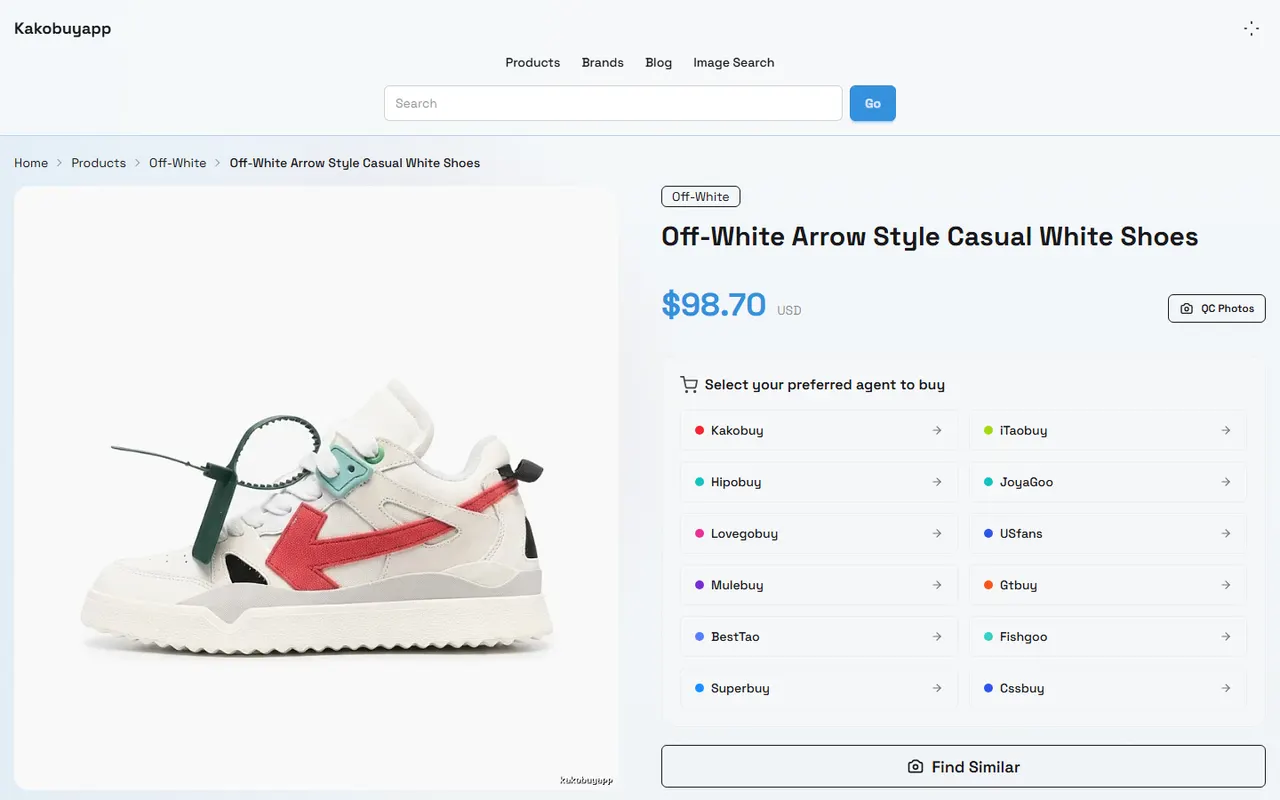
Pre-Order Spec and QC Checklist
Before ordering, save the following as your own checklist:
Does the listing provide clear images of the upper, side, heel, and sole?
Does the size chart include enough length or width information?
Does the displayed structure match the text description?
Are there specific colors, models, or quantities to confirm?
Do you clearly understand the item cost, domestic China shipping, international shipping, and possible customs fees?
Do you understand that warehouse QC mainly checks appearance, quantity, color, size, and model?
After receiving QC photos, do you check left/right shoes, sole, upper, collar, heel, shoe box, and accessories?
If issues arise, are you still within the window for after-sales or returns?
According to Kakobuy, the total item cost generally consists of the item price, international shipping, and customs fees; international shipping is affected by weight, shipping method, and destination region. Actual costs should be based on the checkout page or order information, not estimations from this summary.
If warehouse QC finds appearance or specification issues, buyers should save listing screenshots, order details, and QC photos, then proceed according to the platform's after-sales process. Do not share order numbers, full shipping labels, payment details, or other personal information publicly. 🔐
Keep Primary and Backup Choices Based on Use Case
If your main need is daily walking, prioritize styles with intact appearance, clear sizing, and no obvious sole or heel defects; for backups, choose listings with more complete information that are easier to verify via QC photos.
If occasional indoor activity is planned, the primary choice should also have clear sole tread, defined collar fastening, and intact heel structure; backups can be listings with fuller specifications and more detailed images.
For high-intensity basketball, don't keep a style just because it "looks most like a retro basketball shoe" as your primary. Prioritize items with clear specs, size data, and verifiable structure, and lower expectations when performance evidence is lacking. If you can't confirm sole-court compatibility, heel stability, or size match, hold off on ordering.
The final judgment can be summarized: first use listing structure to filter, then use size data to confirm compatibility range, and finally use QC photos to inspect the actual received goods. This doesn't eliminate all purchasing risks, but it reduces repeated communication and return costs caused by size, appearance, quantity, or model errors.
Agent Platform Shopping FAQs
1. How do I browse QC photos on Kakobuy?
When reviewing Kakobuy's QC photos, focus on features specific to your purchased item. For shoes, check key areas like the toe box, heel, and tongue—look at stitching, shoe shape, and tongue thickness to judge quality. For clothing, examine details such as the collar label, logo embroidery, fabric, and neatness of the collar and cuffs.
2. As a new Kakobuy user, what should I know for my first purchase?
Users accessing the Kakobuy platform for the first time through the spreadsheet typically receive a new-user shipping discount package. They should also review the step-by-step shopping tutorial designed for beginners.
3. What are Kakobuy QC photos?
All agent platforms have dedicated QC teams. When items arrive at Kakobuy's warehouse, the platform conducts a quality check and takes QC photos. Usually three photos are taken, and the team verifies that color, size, specifications, and quantity match the order while checking for quality issues. However, electronics are only checked for appearance. If quality issues or wrong size/color are found, the team immediately requests a return from the seller, ensuring you receive quality items.
4. Is the Kakobuy spreadsheet site safe?
The site does not collect any personal information; it serves solely as a product catalog for the Kakobuy platform. All transactions are completed on the Kakobuy platform.
Browse our latest products and find your next favorite item.